THE movie Paddington2 is the film of the children's book character, the bear Paddington.
The epicentre of the plot is also a book.
We have the series of Paddington books, the film of the books, or a book within the series, and, the crux of the plot, a book.
The character comes from a book, and everybody in the film is chasing the villain, who has stolen the book.
Books in all directions, which is a change from computers, and a reminder that libraries lend books, and shops sell them.
I hope I've mentioned every book involved.
Saturday, 2 December 2017

Friday, 1 December 2017
Typing aside
A MEMOIR with stray observations can delight me, even if I don't like the whole thing.
A A Gill's memoir, which deserves to be called an autobiography because it's sweeping, I have yet to decide on. I've just started to read it.
He says as part of the text that the book isn't written by him, it's written by Michelle. I assume he means Michelle Klepper, one of the people he mentions on a thank-you page at the beginning of the book.
I've jumped to this part of the memoir, so I hope I've interpreted A A Gill correctly. He speaks the book into the phone, to the very efficient Michelle at the other end. Is this how the whole memoir was written? First, he types roughly by computer and then reads what's on the screen to Michelle, who is used to the method. She was once what they called a 'copytaker' on a Fleet Street newspaper. The journalist would phone in his copy and she, among others, would type it in the newspaper office and give hand it over for checking and publication.
The more I look into A A Gill's writing, books, newspaper columns and reviews, the more I go with pleasure towards it, having at first been suspicious of his aggrandized success.
I didn't like The Sunday Times making so much of his obituary and remembrance, but I don't blame them for doing so. To many people he was their anchor in life and they interpreted it through his newspaper column and other writings.
Pour Me: A Life A A Gill 1915 and this paperback Weidenfeld and Nicolson 1916 London
A A Gill's memoir, which deserves to be called an autobiography because it's sweeping, I have yet to decide on. I've just started to read it.
He says as part of the text that the book isn't written by him, it's written by Michelle. I assume he means Michelle Klepper, one of the people he mentions on a thank-you page at the beginning of the book.
I've jumped to this part of the memoir, so I hope I've interpreted A A Gill correctly. He speaks the book into the phone, to the very efficient Michelle at the other end. Is this how the whole memoir was written? First, he types roughly by computer and then reads what's on the screen to Michelle, who is used to the method. She was once what they called a 'copytaker' on a Fleet Street newspaper. The journalist would phone in his copy and she, among others, would type it in the newspaper office and give hand it over for checking and publication.
The more I look into A A Gill's writing, books, newspaper columns and reviews, the more I go with pleasure towards it, having at first been suspicious of his aggrandized success.
I didn't like The Sunday Times making so much of his obituary and remembrance, but I don't blame them for doing so. To many people he was their anchor in life and they interpreted it through his newspaper column and other writings.
Pour Me: A Life A A Gill 1915 and this paperback Weidenfeld and Nicolson 1916 London
Tuesday, 28 November 2017
'Where am I?'
THE London borough of Camden's flagship library, the Swiss Cottage library, is nowhere to be seen.
That is, if you're wandering around Switzerland by mistake looking for it.
I often wonder every time I mention the Swiss Cottage library I'm confusing my overseas readers.
Britain is Britain and Switzerland is Switzerland. So what's Switzerland doing in Britain in the form of a library in London?
Simple. A couple of hundred years ago a novelty inn opened in the form of a Swiss cottage, so the inn was called Swiss Cottage. Many a place-name originates from a landmark, so the area when it expanded was called Swiss Cottage.
You can still see the Switzerland in the public house there now, though it has surely been rebuilt several times.
Fifty years ago the road instead of the Cottage was rebuilt, so to speak, and now the Swiss Cottage stand on a large traffic island in the middle of a giant four-lane one-way road system, which winds around the drinkers, who sit indoors and out.
The Swiss Cottage Library itself is across the road, passed by one arm of the highway, but quietly inland, with a leisure centre and a community centre and luxury flats nearby.
That is, if you're wandering around Switzerland by mistake looking for it.
I often wonder every time I mention the Swiss Cottage library I'm confusing my overseas readers.
Britain is Britain and Switzerland is Switzerland. So what's Switzerland doing in Britain in the form of a library in London?
Simple. A couple of hundred years ago a novelty inn opened in the form of a Swiss cottage, so the inn was called Swiss Cottage. Many a place-name originates from a landmark, so the area when it expanded was called Swiss Cottage.
You can still see the Switzerland in the public house there now, though it has surely been rebuilt several times.
Fifty years ago the road instead of the Cottage was rebuilt, so to speak, and now the Swiss Cottage stand on a large traffic island in the middle of a giant four-lane one-way road system, which winds around the drinkers, who sit indoors and out.
The Swiss Cottage Library itself is across the road, passed by one arm of the highway, but quietly inland, with a leisure centre and a community centre and luxury flats nearby.
Deep thought
SWISS Cottage Library was once known for its book collection of philosophy.
I heard this was not as impressive as it sounds. Perhaps this is a myth: the reason was that in the old days each library shared various parts of the alphabet to locate at which library the books were kept throughout the London borough of Camden. Swiss Cottage's share included the letter 'p', so it became renowned for books on the subject of philosophy.
Anyway, however it got to Swiss Cottage library, the collection is impressive.
Lately I've been reading books by Roger Trigg, founder of the British Philosophical Association, which are of course at Swiss Cottage.
You can't help thinking the professor has an exceptional grasp of reality.
I like very much his common touch, easily understandable. He opens one of his books with, 'A moral argument is often stopped in its tracks when someone refuses to consider a position by saying that "that is just your opinion."'
The books goes on to tell you how he thinks you might get out of that corner. It also nicely isolates many other arguments, true and false, which will either reassure you that you are on the right track in your view of life or suprise you in that you didn't think deeply enough about something others are throwing at you.
I heard this was not as impressive as it sounds. Perhaps this is a myth: the reason was that in the old days each library shared various parts of the alphabet to locate at which library the books were kept throughout the London borough of Camden. Swiss Cottage's share included the letter 'p', so it became renowned for books on the subject of philosophy.
Anyway, however it got to Swiss Cottage library, the collection is impressive.
Lately I've been reading books by Roger Trigg, founder of the British Philosophical Association, which are of course at Swiss Cottage.
You can't help thinking the professor has an exceptional grasp of reality.
I like very much his common touch, easily understandable. He opens one of his books with, 'A moral argument is often stopped in its tracks when someone refuses to consider a position by saying that "that is just your opinion."'
The books goes on to tell you how he thinks you might get out of that corner. It also nicely isolates many other arguments, true and false, which will either reassure you that you are on the right track in your view of life or suprise you in that you didn't think deeply enough about something others are throwing at you.
What's the user

THE library user group is an alternative name for 'friends of the library'.
They are the groups in the borough of Camden and elsewhere that organise events in the libraries and campaign for various causes.
I think the term 'user group' sounds stronger, but some libraries started using 'friends of...' so they stick with that.
One group decided to change from 'user' to 'friends', but someone reminded them how difficult it is to change the name of a bank account, so they immediately changed their minds and stayed as they were.
Tuesday, 5 September 2017
Reminder: books on wheels
WHEN you enter an unfamiliar library--perhaps you are on holiday--always ask for the books-for-sale trolley or shelves. You'll be surprised what you find.
I always approach the enquiry desk with such a question. It's a good warm-up towards the staff helping you on other matters.
It might be that I'm unnecessarily self-conscious, but I always approach the desk wondering whether the member of staff will at first find me awkward, or I'll find him or her awakward or both of us will have that little uncomfortable hesitation which needs to be overcome.
Hmm, I can see I'm becoming a veritable psychologist in the field of library enquiry desks.
Wednesday, 19 July 2017
A hint of history
THE foyer of Swiss Cottage Library provoked me to imagine times before I was born.
This year the emergency evacuation of nearby high-rise residential blocks meant a centre for helping and informing the residents had to be set up. The location was the Library and the attached Leisure Centre. In the Library foyer and around the Leisure-Centre cafe and swimming-pool, there were desks, staff and volunteers in conspicuous jackets. They walked, sat and wrote, and assured the many visitors.
The high-rise blocks had been inspected and tested for safety against fire, and still are being subjected at the time of writing.
The alert to the London borough of Camden had come from the fatal fire in a high-rise block in west London.
All this set me thinking. You might know from my previous posts my determination to remember a library in the War. That was the forebear of this library, the ill-fated Hampstead Central Library, bombed twice in air raids in the Second World War, once with the hideously destructive VII rocket. It's a few bus stops up the road and still standing, now used as an arts centre.
In the present, the west London tower fire is unbearable to contemplate. It cast me back to the people who lived through the air raids of the First World War and the Second World War. Such disasters as the present one in west London they might have had to endure every week or more.
The present occupation of Swiss Cottage Library and Leisure Centre channeled me to history, buoying me along to see the Blitz spirit suddenly roused in the present. The old rallying points are invisible but still there.
This year the emergency evacuation of nearby high-rise residential blocks meant a centre for helping and informing the residents had to be set up. The location was the Library and the attached Leisure Centre. In the Library foyer and around the Leisure-Centre cafe and swimming-pool, there were desks, staff and volunteers in conspicuous jackets. They walked, sat and wrote, and assured the many visitors.
The high-rise blocks had been inspected and tested for safety against fire, and still are being subjected at the time of writing.
The alert to the London borough of Camden had come from the fatal fire in a high-rise block in west London.
All this set me thinking. You might know from my previous posts my determination to remember a library in the War. That was the forebear of this library, the ill-fated Hampstead Central Library, bombed twice in air raids in the Second World War, once with the hideously destructive VII rocket. It's a few bus stops up the road and still standing, now used as an arts centre.
In the present, the west London tower fire is unbearable to contemplate. It cast me back to the people who lived through the air raids of the First World War and the Second World War. Such disasters as the present one in west London they might have had to endure every week or more.
The present occupation of Swiss Cottage Library and Leisure Centre channeled me to history, buoying me along to see the Blitz spirit suddenly roused in the present. The old rallying points are invisible but still there.
Monday, 8 May 2017
Taunting and haunting
THE Hampstead Central Library, the ghost library within the modern building that still maintains its old, taunting exterior...it preoccupies me.
The blankness on one side of the building--is that where once stood the rest of the structure obliterated by the air raid nearly eighty years ago. I ought to return soon. The female watcher on War duty and killed in the raid needs to be better remembered.
Diary, 8th May 2017
The blankness on one side of the building--is that where once stood the rest of the structure obliterated by the air raid nearly eighty years ago. I ought to return soon. The female watcher on War duty and killed in the raid needs to be better remembered.
Diary, 8th May 2017
Tuesday, 18 April 2017
Just William among the new architecture
diary, 8th April 2017
IT WAS a hard fight, but William won.
The Society that meets annually to relish the comical stories of the well-meaning or revengeful schoolboy had their heads full of the imaginary landscapes of English villages, footpaths through farmers' fields, community halls with pretentious guest speakers, and disused barns to work out colossal plans. Yet these days meetings are held more frequently in glass and steel modern buildings. This meeting, outside London at a redesigned university, challenged participants in a sleek hall with sheer walls and sweeping floor to envisage the old-fashioned scenes from the William books. The challenge was met with pleasurable defiance.
No matter where they are, the Just William Society members maintain the visions of William landscape and adventure of a comical century from 1919 to 1969. Analysis and celebration of the past abound, a past that strangely is familIar to the present.
IT WAS a hard fight, but William won.
The Society that meets annually to relish the comical stories of the well-meaning or revengeful schoolboy had their heads full of the imaginary landscapes of English villages, footpaths through farmers' fields, community halls with pretentious guest speakers, and disused barns to work out colossal plans. Yet these days meetings are held more frequently in glass and steel modern buildings. This meeting, outside London at a redesigned university, challenged participants in a sleek hall with sheer walls and sweeping floor to envisage the old-fashioned scenes from the William books. The challenge was met with pleasurable defiance.
No matter where they are, the Just William Society members maintain the visions of William landscape and adventure of a comical century from 1919 to 1969. Analysis and celebration of the past abound, a past that strangely is familIar to the present.
Thursday, 6 April 2017
The Storey of Camden
diary 6 April 2017
David Storey reminds us of Camden in flight.
His novel Flight into Camden keeps for us the borough we once knew as it flitted into the future which is now the present.
He died aged 83.

I would pass him on the Heath and in the street, knowing who he was and slightly in awe of even the later man's physicality. I was thinking of the rugby player who wrote This Sporting Life.
David Storey reminds us of Camden in flight.
His novel Flight into Camden keeps for us the borough we once knew as it flitted into the future which is now the present.
He died aged 83.
I would pass him on the Heath and in the street, knowing who he was and slightly in awe of even the later man's physicality. I was thinking of the rugby player who wrote This Sporting Life.
Thursday, 16 March 2017
Diary 16 March 2017 Private library privilege
ACCESS to Bulwer-Lytton's private library at the weekend. What a writer was Lord Lytton in the age of Queen Victoria. All those volumes.
The visit to his stately home Knebworth, outside London, brought back memories of admiring the prolific, promiscuous lord. I had read his science fiction The Coming Race, about the civilisation that lives deep underground in the earth and the fear they would take over on the surface.
In another work, Haunters and the Haunted, hero takes his bull terrier to an empty house for some ghost hunting. I'm re-reading that story.
Edward Bulwer Lytton died about 150 years ago. He had a good brand, not happy to establish when he was alive, but invaluable to his literary memory. I remember him not only as a good, prolific writer, but also, according to the publicity, as a womaniser with a vengeful wife.
The media have used him as a butt for their stale joke, that he is a bad writer, when he isn't.
The visit to his stately home Knebworth, outside London, brought back memories of admiring the prolific, promiscuous lord. I had read his science fiction The Coming Race, about the civilisation that lives deep underground in the earth and the fear they would take over on the surface.
In another work, Haunters and the Haunted, hero takes his bull terrier to an empty house for some ghost hunting. I'm re-reading that story.
 |
| Edward Bulwer-Lytton: prolific, scandalous |
Edward Bulwer Lytton died about 150 years ago. He had a good brand, not happy to establish when he was alive, but invaluable to his literary memory. I remember him not only as a good, prolific writer, but also, according to the publicity, as a womaniser with a vengeful wife.
The media have used him as a butt for their stale joke, that he is a bad writer, when he isn't.
Wednesday, 11 January 2017
Forgotten, but still half there
I FELT frustrated and a little guilty. I didn’t know what had happened to the Swiss Cottage Library before it became the Swiss Cottage Library. It used to be the Hampstead Library before all the little boroughs combined to become Camden, and it changed its name to Swiss Cottage Central Library. Swiss Cottage Central Library was built on different site, up the Finchley Road, London NW3, from 1964.
There is a certain weirdness to the tale, as a ghost of Hampstead Library is still there, well, half there, and almost forgotten is the fact it used to be the main Library. Now the ornate Victorian-age building is used as a modern arts centre, corner of Arkwright and Finchley roads. It is a complete arts centre in half a building. The other half was removed by Hitler and his German bombers when they invaded the skies over Finchley Road during the Second World War.
While the Second World War was on, Hampstead Central Library was damaged badly twice in air raids. Hitler’s bombs obliterated the Reference and Lending Rooms and the Book Store. More than twenty-five thousand books were lost. Touchingly, the Children’s Library, which survived, was changed to an emergency library. Repaired and rebuilt after the War, venerable Hampstead Central Library closed peacefully, and the offspring, Swiss Cottage Central Library, appeared near the Underground station in 1964.
Books that survived the bombing still shelter in the Reserve Stock at Swiss Cottage. Sometimes I order a book and unexpectedly it is a war veteran. When it is, and comes from the basement modestly into my hands, I look at the old label and tell it I can imagine what it went through during the War.
There is a certain weirdness to the tale, as a ghost of Hampstead Library is still there, well, half there, and almost forgotten is the fact it used to be the main Library. Now the ornate Victorian-age building is used as a modern arts centre, corner of Arkwright and Finchley roads. It is a complete arts centre in half a building. The other half was removed by Hitler and his German bombers when they invaded the skies over Finchley Road during the Second World War.
While the Second World War was on, Hampstead Central Library was damaged badly twice in air raids. Hitler’s bombs obliterated the Reference and Lending Rooms and the Book Store. More than twenty-five thousand books were lost. Touchingly, the Children’s Library, which survived, was changed to an emergency library. Repaired and rebuilt after the War, venerable Hampstead Central Library closed peacefully, and the offspring, Swiss Cottage Central Library, appeared near the Underground station in 1964.
Books that survived the bombing still shelter in the Reserve Stock at Swiss Cottage. Sometimes I order a book and unexpectedly it is a war veteran. When it is, and comes from the basement modestly into my hands, I look at the old label and tell it I can imagine what it went through during the War.
Friday, 15 April 2016
New wave of old tide
ON
the horizon, we were warned, was a coming tidal wave of HG Wells’s works published again. The
occasion is that this year he will come out of copyright. Riding the wave will
be the excellent editions of Oxford World Classics.
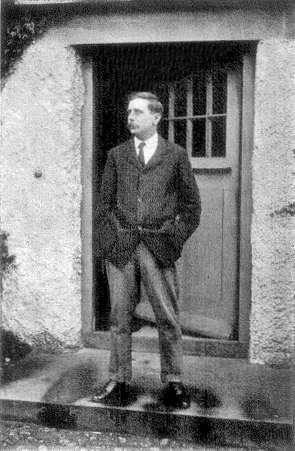 |
| HG Wells at Sandgate, and soon with you again |
The news came at a reading-aloud of
Wells’s short story The Door in the Wall about a man who keeps seeing
the same tempting door in the same wall but in
different parts of London. At the lectern was Robert Lloyd Parry, the
actor-producer exponent of one-man
 |
| Robert Lloyd Parry: warning of HG Wells tidal wave photo courtesy Nunkie Productions re-enactments best-known for his M.R James ghost stories. The night location was a mysterious public house tucked away down an obscure historic alley in the city of London. |
Titles with a head start
THE
Sherlock Holmes stories are off to a head start with the reader because of
their gripping titles--especially the startlingly descriptive. For instance, The
Blue Carbuncle, The Crooked Man, and The Red-Headed League. Even if you don’t
finish the story, out of curiosity you’ll definitely start it. I’d be surprised
if you didn’t also want to finish it.
Good in part
THINKERS
have had some great ideas. Penguin have been inspired by the saying cheap is
superior (£4-99 at present). They have
taken great ideas and called the series Great Ideas. Retrieved from each
thinker’s major works are neatly distilled sections that have made him or her
famous or notorious. I’m trying Darwin and Maistre. Both caused a stir in their
times. Darwin opens saying that Nature we admire is constantly eating itself to
recreate. Maistre, coincidentally, but not till his page 86, points out that
every second violence is going on somewhere, and man is the greatest exponent.
There is more to these two, and other ideas |
| Good to look at, very good to handle. See page 86 for the famous Maistre passage |
are presented in aesthetically designed small editions, with embossed covers. Their spines (the books’, not the thinkers’) are thin, but skilfully coloured to catch the eye on the shelves.
Cheap is the new superior
WORDSWORTH--the
publishers, not the poet-- have raised the status of the cheap edition to
superior. No longer can you look down on such a paperback. They even have
introductions, the absence of which in a cheap edition used to be a sign
of cost-cutting.
Wordsworth paperbacks appear on our library shelves in the endearing
clear-plastic protective covers, filling gaps that other, older volumes have
left by their absence or banishment to reserve
stock.
When I wanted Sherlock Holmes stories,
collections now not always deserving of
a place on the shelves, there was a worthy Wordsworth edition of his Adventures
and Memoirs, shining with
No price, as a matter of interest, is printed
anywhere, but probably so the seller can
charge less, not more, if we’re talking bargain books and not library. In the
1990s, when they started, Wordsworth sold each book for £1.
 |
| Not even his adventures and memoirs, but here the complete Sherlock Holmes
the admirably gaudy cover of the great man in red smoking jacket
and puffing his pipe. Inside, of course, an introduction and notes. The stories
about a man who tries to stay young by foul means not fair, and the
original dog in the night-time, and
others, inhabit the pages.
|
Diary entry
DIARY 10 March 2016
I heard good things about the 16th
century French essayist Montaigne, about his being easy to read and detesting
cruelty as if he were in the 21st century. Borrowed his complete Essays,
a fat library paperback, but it was overwhelming. Despite my worries about
selected works (see this blog), Montaigne’s The Essays: A Selection, edited
by M.A. Screech, is better. Less is more.. I have more strength
to consider his multitudinous views on cats, Roman tyrants and almost
everything else. For someone who died more than four centuries ago he is, as
the Editor says, ‘utterly readable’.
The select few
A book title or
description Selected Works has for a long time caused a peculiar
reaction in me.
Ever since adolescence I can’t help
thinking of someone selecting a gift. You are supposed to have trouble
selecting the right gift. Sometimes you get it wrong. I’m led to thinking the
person who selected the Selected Works might have got it wrong. The
older we get, the harder we are to please. I approach a Selected Works
ready to be disappointed. What if the editor left out a favourite poem, or, as
has been known, refers to a poem his Introduction but excludes it from the
book! If it is a gift, I feel sympathy for the giver, and guilt if the gift is
not exactly what I wanted.
I
prefer a Collected Works or a Complete Works. My preference abruptly reverses
if the item is a bulky volume or more
than two volumes. A Selected Works in
the rucksack is not so bad after all.
Books outlive us
MANY of the books in
Swiss Cottage Library Reserve Stock outdo us humans. Some are a hundred years
old and more, but are still at work, leaving the shelves and going into
borrowers’ homes like young book do. Admittedly, they have had cosmetic surgery
and been rebound. Some of the re-bindings have that delightfully old-fashioned and
hard-as-nails green or dark red covers. They’ll outlive me.
Diary entry
Diary 5
March 2016 There is more to tell about
the Hampstead Central Library, and that mysterious vacant space next to the
building, corner of Finchley and Arkwright Roads, London NW3.
From photographs of
bomb damage I thought I’d worked out that the empty site was where the rest of
the Hampstead Central Library stood before it was in part destroyed by enemy
planes in the Second World War. Further research tells me that there was a ‘bomb
site’ (UK Post-War talk) next door to the library, which was reported to have
been purchased by the Library. What exactly does that mean? The Library had
part of its own building turned into a bomb site and it bought another bomb
site next door to their own bomb site?
Obscure historical references in newspapers and documents can be
confusing. Anyway, I had better visit that vacant block, which the present
occupiers of the former library site, an arts centre, use for outdoor events.
Subscribe to:
Posts (Atom)